The Amateur's Code: Ethics on the Air🔗
Beginner
This article opens the On the Air topic. No prior knowledge required. It isn't on the Basic Qualification exam, but it describes how the people you'll meet on the air expect each other to behave.
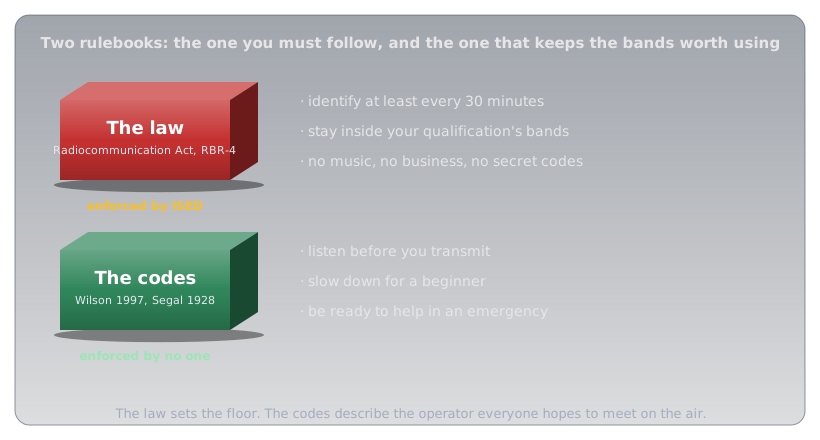
Amateur radio runs on two rulebooks. One is the law: the Radiocommunication Act and the standards Innovation, Science and Economic Development Canada (ISED) issues under it, such as RBR-4, which says what frequencies each qualification may use, how often a station must identify itself, and what may and may not be transmitted. ISED enforces it.
The other rulebook fits on an index card, and nobody enforces it at all. Yet it's the one that makes the bands a pleasant place to be: shared frequencies with no traffic lights, where thousands of strangers take turns politely because they've agreed to. This article looks at the two short codes that describe that agreement.
Canada's Code of Ethics🔗
The Code of Ethics for Canadian Amateur Radio Operators was written by Bill Wilson, VE3NR. It appeared in The Canadian Amateur, the magazine of Radio Amateurs of Canada (RAC), in December 1997, and RAC still publishes it in its operating guidelines. It describes "the thoughtful Radio Amateur" in four words:
- Responsible: using courteous operating practice, complying with regulations and accepted technical standards.
- Progressive: striving to develop and improve operating and technical skills.
- Helpful: offering assistance, support and encouragement to other amateurs, especially beginners.
- Public spirited: offering use of station, knowledge and skills as a public service whenever possible.
The Radio Amateur's Code🔗
The older code was written in 1928 by Paul M. Segal, W9EEA, and is kept by the American Radio Relay League (ARRL), which has revised its wording twice since. It names six marks of "the amateur spirit": the radio amateur is considerate, loyal, progressive, friendly, balanced, and patriotic.
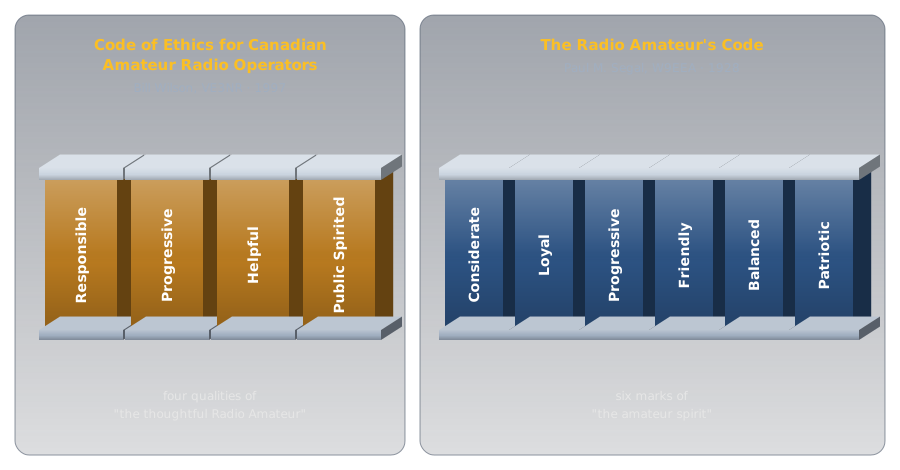
The two codes overlap almost entirely. Segal's "considerate" and "friendly" are Wilson's "responsible" and "helpful"; both name "progressive"; Segal's "patriotic" (station and skills ready to serve country and community) is Wilson's "public spirited". Segal adds two of his own: loyal, supporting fellow amateurs, local clubs, and the national society that represents amateur radio internationally (in Canada, RAC), and balanced, the reminder that radio is a hobby that should never crowd out family, work, school, or community.
What the Codes Look Like on the Air🔗
Neither code lists rules, which is deliberate: they describe an attitude. In practice it shows up as a handful of habits that every experienced operator recognizes.
- Listen first. Before transmitting on a frequency, listen long enough to be sure it isn't in use, then ask whether it is. Most of the friction on the air comes from someone who didn't.
- Slow down for a beginner. Answer a nervous first call, repeat a call sign patiently, send Morse code at the speed the other station can copy. Everyone on the air was a beginner once.
- Keep your signal clean and your station in good order. A well-adjusted transmitter doesn't splatter onto neighbouring frequencies; that's both "progressive" and "considerate".
- Be ready to help. Amateur radio's public service, from relaying messages in an emergency to helping at community events, is the "public spirited" line made real.
- Keep it in proportion. The "balanced" principle applies off the air too.
Transmitting on amateur frequencies in Canada requires an Amateur Radio Operator Certificate with the right qualification for the band. Listening needs no certificate at all, and listening is where these habits are best learned: an hour spent hearing how experienced operators handle a busy frequency teaches more etiquette than any list.
Practice🔗
1. Two Rulebooks
What's the difference between RBR-4 and the Code of Ethics for Canadian Amateur Radio Operators?
Solution
RBR-4 is a standard issued under the law: ISED enforces it, and breaking it can cost a certificate. The Code of Ethics is a voluntary description of good conduct: nobody enforces it, but it's what other operators expect.
2. Name the Four
What four qualities does the Canadian Code of Ethics give for "the thoughtful Radio Amateur"?
Solution
Responsible, Progressive, Helpful, and Public Spirited.
3. The Balanced Amateur
Which principle of The Radio Amateur's Code says radio should never interfere with duties to family, job, school, or community?
Solution
Balanced.
4. Before You Transmit
You want to call another station on a frequency that seems quiet. What should you do first?
Solution
Listen for a while to make sure the frequency isn't in use (a conversation may be in a pause, or you may hear only one side of it), then ask whether it's in use before calling.
Quick Recap🔗
-
Two rulebooks
The law (enforced by ISED) and the codes of conduct (enforced by no one).
-
Canada's Code of Ethics
Bill Wilson, VE3NR, 1997: Responsible, Progressive, Helpful, Public Spirited.
-
The Radio Amateur's Code
Paul M. Segal, W9EEA, 1928: Considerate, Loyal, Progressive, Friendly, Balanced, Patriotic.
-
On the air
Listen first, help beginners, keep your signal clean, be ready to serve, keep it in proportion.
Further Reading🔗
The Codes
- Operating Guidelines — Radio Amateurs of Canada — the Code of Ethics for Canadian Amateur Radio Operators
- Amateur Code — ARRL — the current wording of The Radio Amateur's Code
Related
- ISED Basic Qualification Anki Deck — the exam's operating-procedure questions, ready to drill